
One Business Problem, Many Sources of Disruption
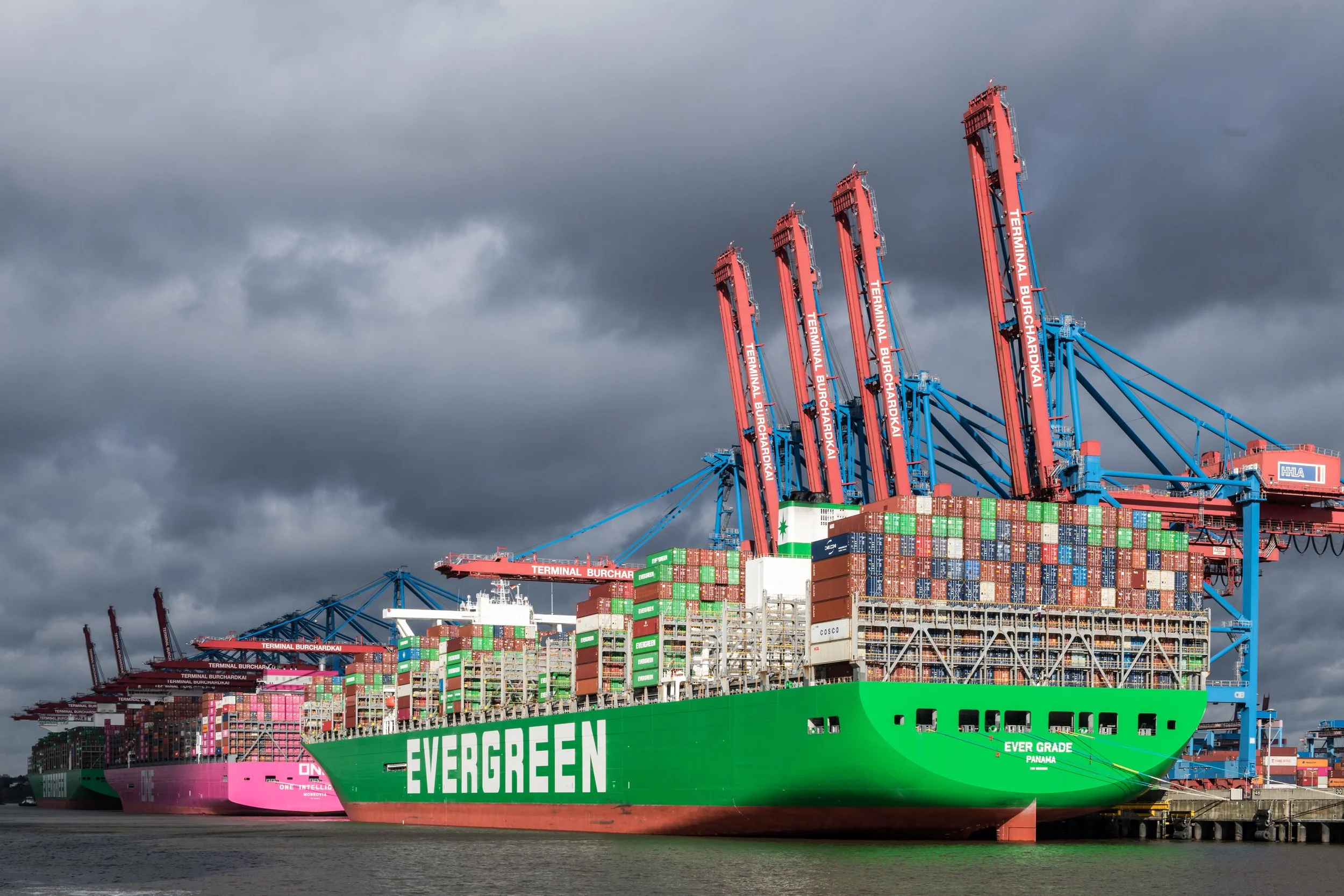
Credit: Wolfgang Weiser, Pexels
On 17 September 2026, Prime Minister Mark Carney addressed the European Parliament on the case for a closer Canada and European Union alliance. What held my attention was not the geopolitics; it was the word he built the argument on.
He named the conditions first: “Today, our societies are being shaken by new storms: the upheaval caused by climate change, the erosion of democratic norms, the weaponisation of trade.” Then the response: “Sovereignty requires resilience – the ability to withstand shocks,” and “The objective is not self-sufficiency. It is collective resilience.” His image for it was a forest: “A single tree will come down in it. A forest will not.” (Prime Minister of Canada)
I notice resilience travelling where other climate language stalls: across political affiliation, sector and geography. In my view, that is because it assumes disturbance rather than denying it, and because it protects the fundamentals while permitting change where change is needed.
For a small or medium-sized enterprise (SME), the overlap is concrete. Keep one current list of your critical inputs showing the supplier, production location, country of origin, whether each is single-sourced, and where an alternative would come from. Add product classification where trade exposure matters. The same underlying information can help identify where tariffs or trade disruption may affect your costs, which suppliers are exposed to physical hazards, and whether your alternative source shares the same vulnerability. Resilience does not necessarily require separate exercises for each type of disruption.
The timing is not comfortable. At the same time that resilience is being framed around multiple sources of disruption, another potentially significant source of physical disruption is developing. On 10 September 2026, the National Oceanic and Atmospheric Administration’s Climate Prediction Center reported that “El Niño is strengthening, with a greater than 90% chance of a very strong event during the Northern Hemisphere fall and winter 2026-27.” Callahan and Mankin, writing in Science, estimated US$5.7 trillion in global economic losses in the half-decade following the 1997-98 El Niño, relative to a world without that event.
What I do not know is whether SMEs will assign budget specifically to climate resilience while trade, financing and technology compete for the same attention. Or whether resilience will increasingly be treated as one business problem spanning all of them. I am watching, not concluding.
Thinking about these questions in your own business?
References
Callahan, C. W. & Mankin, J. S. (2023). “Persistent effect of El Niño on global economic growth.” Science, 380(6649), 1064–1069. DOI: 10.1126/science.adf2983.
NOAA Climate Prediction Center. (10 September 2026). “ENSO Diagnostic Discussion.” National Weather Service, National Oceanic and Atmospheric Administration.