
Approach
A co-created climate risk and adaptation method your team can use again.
All 3 tiers follow the same 6-step logic. Snapshot delivers the first 3 steps as a single interpreted hazard report. Foundational keeps every step proportionate. Comprehensive goes deeper, adds formal standards structure and independent review. In every case, your team participates in the reasoning rather than receiving a black-box report.

01
Intake
A short intake captures the location, assets, business context and external request before we meet, so the first working session starts with the information that matters.
04
Impact chains & workshop
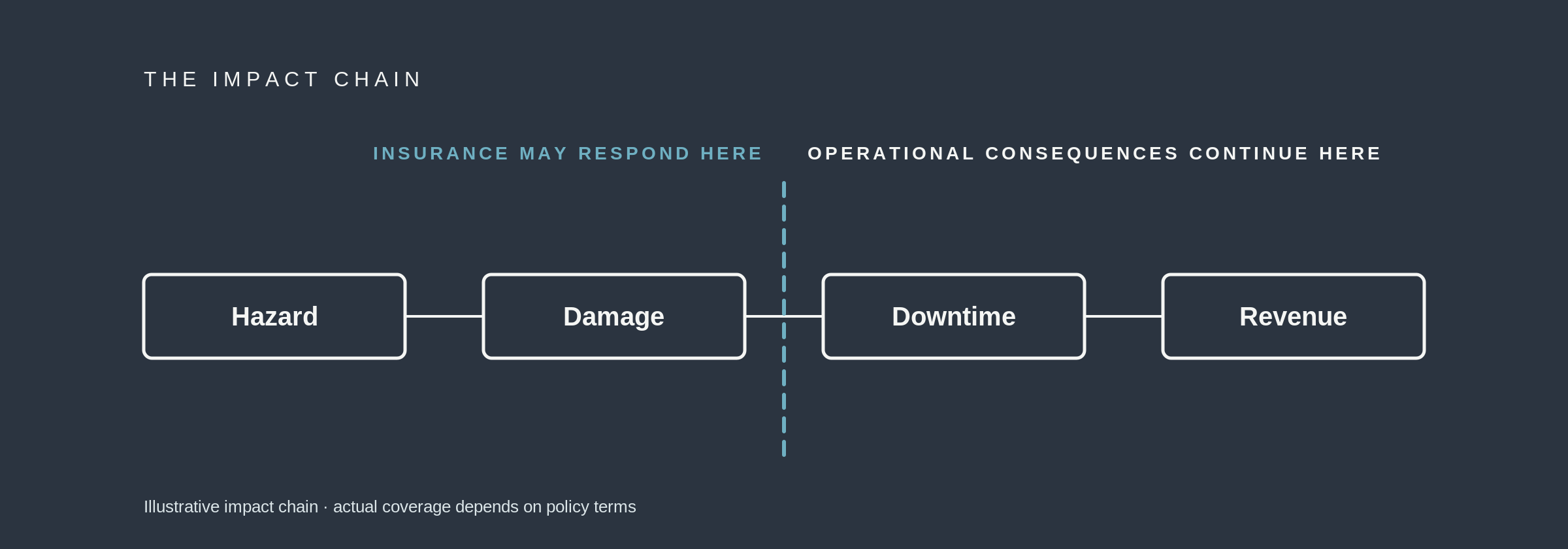
We trace how hazards can affect assets and operations — from physical impact through downtime, supply disruption, financial consequences and other business effects. Comprehensive develops this through a structured risk workshop and uncertainty assessment.
02
Scope & horizons
We agree what is in scope, which decisions matter and which time horizons are relevant. Comprehensive adds formal scenario framing and a documented scoping basis.
05
Options & pathways
We identify feasible resilience and adaptation options, consider sequencing and trade-offs, and define the conditions that could justify acting sooner, later or differently.
03
Physical climate hazard screening
We screen the agreed hazard set using Munich Re Location Risk Intelligence and relevant public sources, then review the evidence with your team.
06
Validation & handover
We validate the findings, finalize the agreed deliverables, clarify how they can be used externally and transfer enough of the method for your team to maintain the work.
Where insurance and operational resilience differ
Insurance is one financial risk-transfer mechanism. Resilience asks a different question: what happens to the business before, during and after disruption, and what can reduce the consequences?
We make that relationship visible using your sites, assets and operating context rather than treating the insurance policy as the whole risk picture.
The standard physical climate hazard screening panel
River flood

Extreme heat

Drought
Surface water
Extreme cold

Snow load


Hail
Windstorm

Lightning

Wildfire

Tornado

Sea level & storm surge

The hazard set is confirmed during scoping. The standard panel is a starting point; hazards are included or excluded according to location, exposure and relevance.
Who does the work
Angie leads, delivers and signs every engagement. Specialist inputs or independent review are identified explicitly where they form part of the agreed scope. AI may support defined workflow tasks; professional judgement and findings remain human-led.
How you pay
A 33% deposit, then 2 installments tied to delivery milestones. No retainer required to start. Fees are quoted in the currency agreed at engagement, exclusive of applicable taxes.
What makes the approach different
Decision-led
We start with the decision, request or business problem that triggered the work, rather than producing climate information without a clear use.
Proportionate
The depth of analysis should match the consequences of getting the decision wrong. Screening is enough for some questions; others justify a full assessment.
Participatory
Your operational knowledge is part of the evidence. Workshops and working sessions are used to test assumptions and build findings with the people who understand the business.
Capability-building
The aim is not to make the business permanently dependent on an external consultant. The method and reasoning are made visible so your team can maintain and extend the work.