
Foundational · Physical climate risk screening
Physical climate risk screening at the location that matters most.
Five working sessions over 5 weeks. We screen physical climate risk at one priority location, identify a short list of practical resilience actions, and prepare a one-page evidence summary you can use with an insurer, lender or buyer. It is designed for businesses that need a credible first answer without commissioning a full climate risk assessment.
From
$A
Duration
5 weeks
scope
1 location
sessions
5 live
How the physical climate risk screening works
Live and virtual. Analysis and drafting happen between sessions, so your time is spent deciding, not watching.
01
02
Kickoff, scope & climate risk context
Confirm the priority location, the decision or request driving the work, key assets, time horizon and intended audiences
Review the standard 12-hazard panel at the priority location using Munich Re Location Risk Intelligence and relevant public sources
90 min
90 min
03
04
Develop practical resilience actions and draft the evidence summary your insurer, lender or buyer can use
90 min
05
Data & hazard screening
Exposure, existing measures & priorities
Actions & external summary
90 min
Plan review & handover
Identify what is exposed, what resilience measures already exist, and which gaps are worth addressing first
Finalize the screening, resilience actions and external summary, and agree how the material should be used and updated
90 min
no
session
Focus
length
What you receive
-
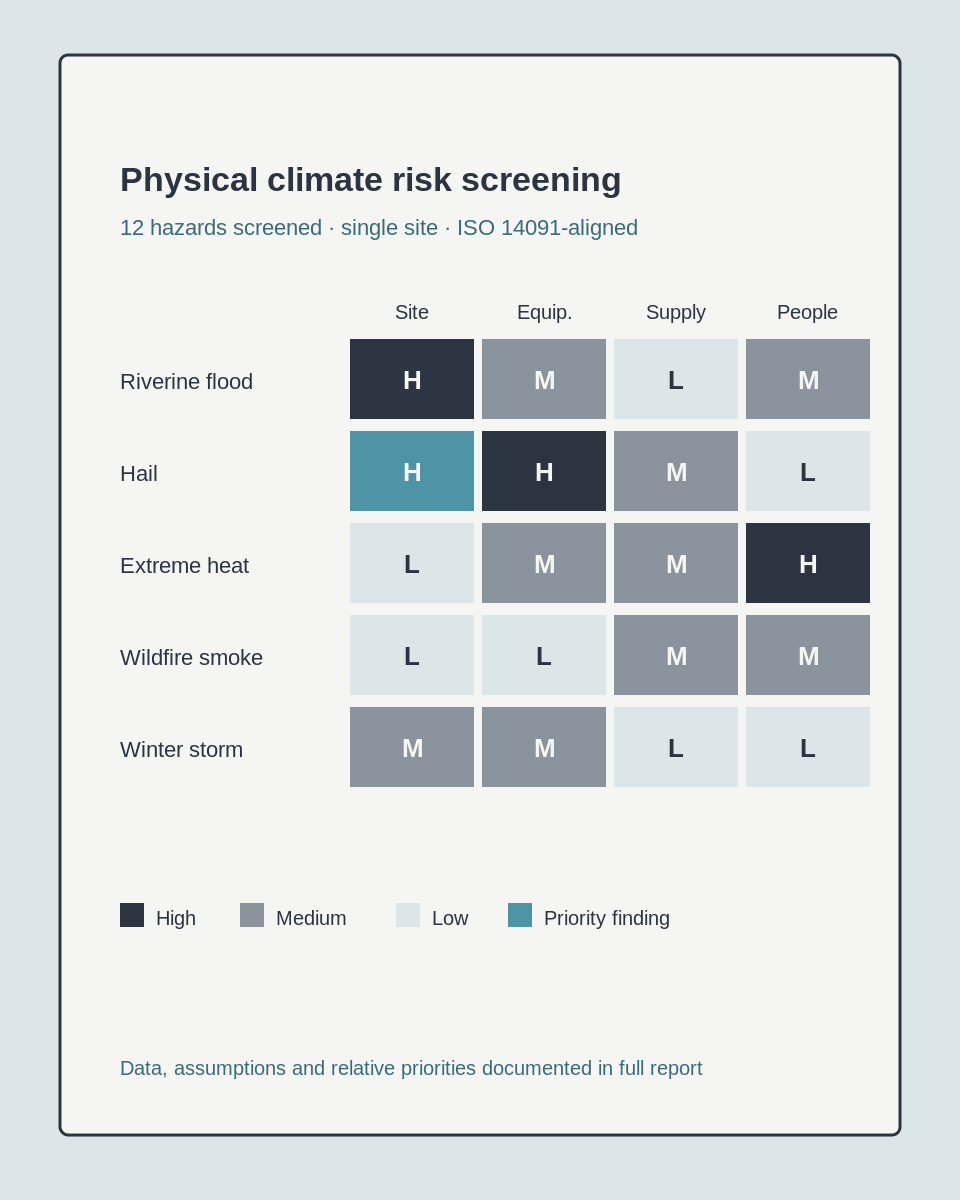
Physical climate risk screening summary
Twelve hazards screened at your priority location, with the data, assumptions and relative priorities made visible.
-
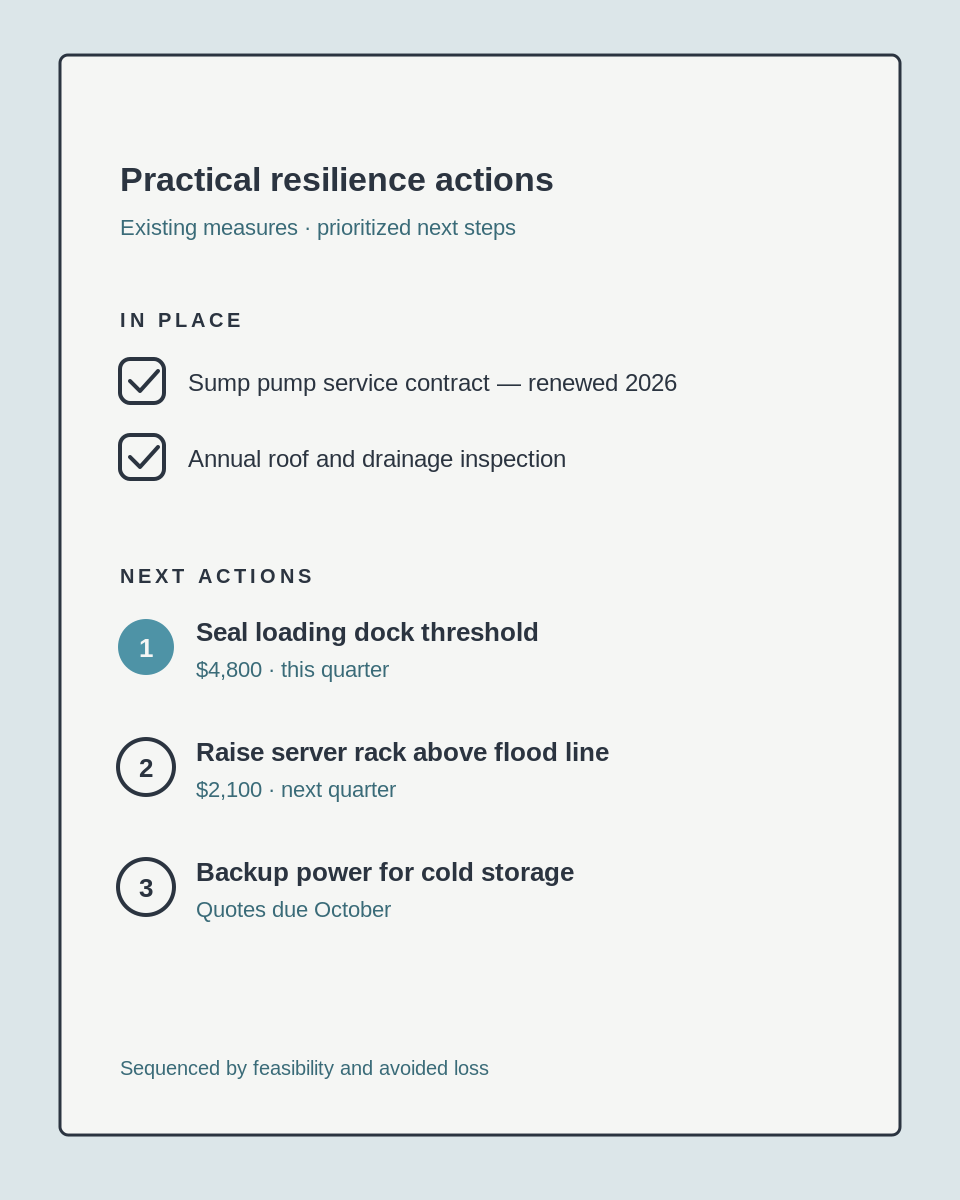
Practical resilience actions
Existing measures worth recognizing, plus a short prioritized list of feasible next actions.
-
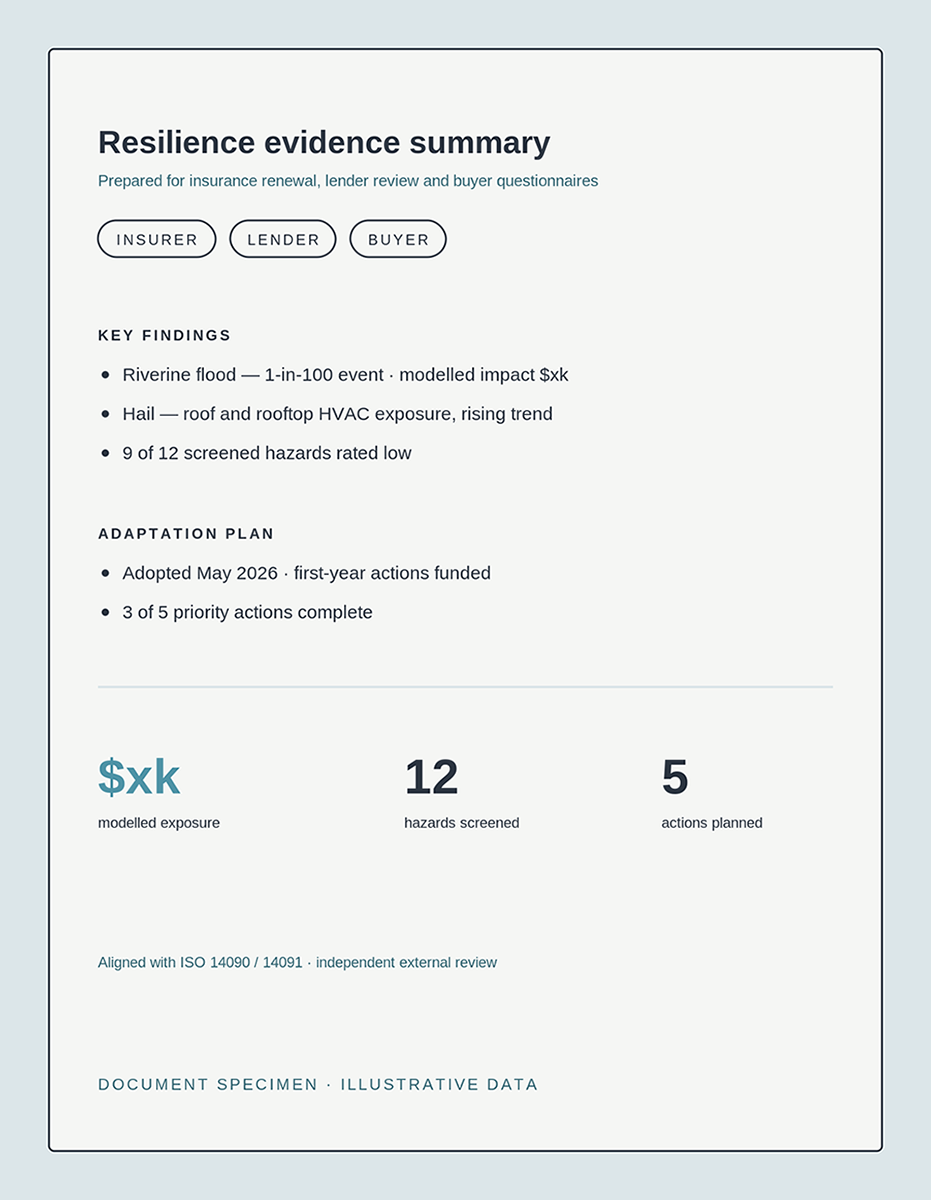
One-page external summary
A concise evidence summary designed for reuse in insurer, lender and buyer conversations.

Cohort option
Three non-competing companies, from $B each
Three non-competing companies work through selected sessions together. Company-specific analysis, findings and deliverables remain confidential. Participants sign a mutual confidentiality protocol at intake, and direct competitors are not placed in the same cohort.
The upgrade credit
Forty percent of the Foundational fee ($H) credits against Comprehensive if you go deeper within 12 months. The full Snapshot fee credits against either deeper tier within 90 days. Starting small does not cost you later.
What Foundational is not
Foundational is a screening-level engagement for one priority location. It is not a full ISO 14091 climate risk assessment and does not include independent external review. If several sites matter, the decisions are material, or a client or funder requires a more complete assessment, Comprehensive is the appropriate depth.
Frequently asked questions
What is physical climate risk screening?
Physical climate risk screening is a proportionate first assessment of the hazards that could affect a location and the business activities that depend on it. It helps identify where deeper analysis or resilience action is justified without beginning with a full climate risk assessment.
What does the Foundational engagement include?
It includes screening one priority location across a standard 12-hazard panel, identifying existing and potential resilience measures, prioritizing practical actions, and preparing a concise external evidence summary.
Can we use the results with an insurer, lender or buyer?
Yes. The underlying analysis is prepared once and the evidence can be framed for the external audience asking the question. The engagement does not guarantee that an insurer, lender or buyer will accept a particular response.
When should we move to a full climate risk assessment?
A full assessment is more appropriate when several sites are material, the decision has significant financial or operational consequences, uncertainty needs deeper treatment, or the work needs to follow a more complete standards-based process.